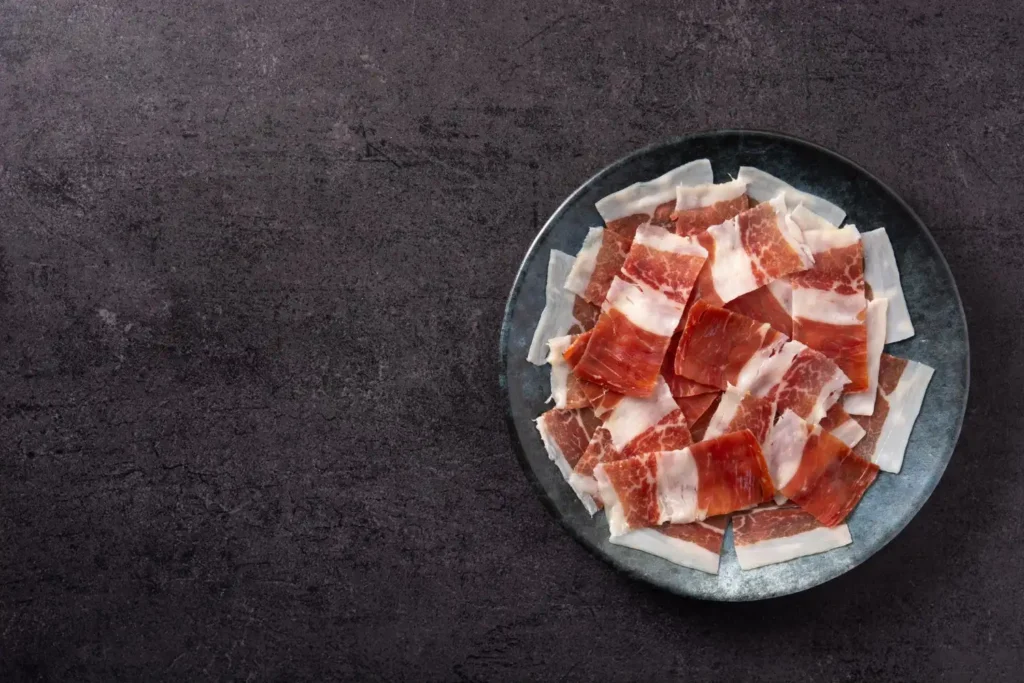
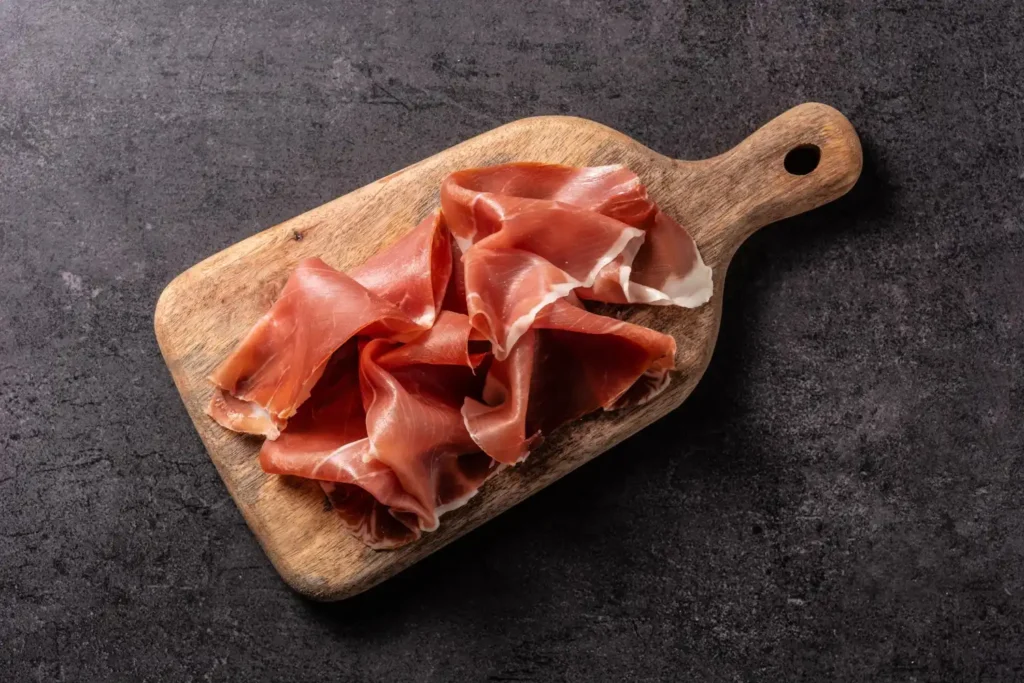
Serrano ham is a dry-cured Spanish ham made from white pigs and aged in cool mountain air, traditionally in the highlands of Spain.
The name comes from the Spanish word for mountain, “sierra.” That mountain climate, dry and cold, is what gives serrano ham its distinctive texture and deep, savoury flavour.
How Serrano Ham Is Made
The process starts with salting. Fresh hind legs are packed in sea salt for a week or two, depending on their weight.
After salting, the hams are rinsed, dried, and hung to cure. This curing stage is where the magic happens. Over the next 9 to 24 months, the ham slowly loses moisture and develops its characteristic flavour: slightly nutty, mildly salty, and rich without being heavy.
Serrano Ham vs Jamón Ibérico: What’s the Difference?
Both are Spanish cured hams, but they come from different breeds and carry a different price tag for good reason.
Serrano ham is made from white pigs, most commonly Duroc or Landrace breeds. It’s widely available, excellent in quality, and an ideal starting point for anyone new to Spanish cured meats.
Jamón ibérico is made from the native black Iberian pig, a breed found only in the Iberian Peninsula. The best versions, labelled “de bellota,” come from pigs that roam free-range oak forests and feed on acorns in the final months before slaughter. That acorn diet gives the fat a unique flavour and a high concentration of oleic acid, the same healthy fat found in olive oil.
The difference in taste is real. Ibérico has a richer, more complex, almost buttery flavour that serrano doesn’t match. But serrano is the everyday choice, perfect for sandwiches, cheese boards, and tapas, and far better value for regular use.